

Are you looking for a practical way to follow a renal diet and protect your kidney health through better food choices? When kidney function declines, the body may struggle to remove waste, balance fluids and regulate sodium, potassium and phosphorus. A balanced kidney diet helps manage these nutritional concerns and supports overall health.
Are you searching for guidance on what is a renal diet and how to follow it daily? It involves choosing suitable foods, managing portions and adjusting nutrient intake according to kidney function. This guide covers renal diet foods, foods to limit and meal-planning tips, along with how The Kidney MD in El Paso, Texas, supports personalized kidney care.
Quick Answer: What Is a Renal Diet?
A renal diet is an eating plan designed for people with kidney disease. It helps manage nutrients such as sodium, potassium, phosphorus and protein, along with fluid intake when needed. A personalized kidney disease renal diet supports nutritional health and helps manage complications linked to reduced kidney function.
Key Takeaways
- A renal diet helps people with kidney disease manage their nutritional needs.
- Renal diet restrictions may include adjusting sodium, potassium, phosphorus and protein intake.
- Kidney-friendly foods include selected fruits, vegetables, whole grains and protein sources.
- Foods to avoid with kidney disease depend on kidney function and blood test results.
- A renal diet meal plan should match your stage of kidney disease and treatment.
- People receiving dialysis may need different renal diet foods than those who are not on dialysis.
What Is a Renal Diet and How Does It Work?
A renal diet, also called a kidney diet, is a meal plan designed for people whose kidneys cannot remove waste and excess fluids effectively. When kidney function declines, minerals and waste products may build up in the blood. A balanced kidney diet helps manage these substances, maintain nutritional health and support overall well-being.
A kidney disease renal diet may involve adjusting sodium, potassium, phosphorus, protein and fluid intake according to individual needs. People with early-stage CKD may mainly need to reduce sodium, while those with advanced kidney disease may require additional changes based on test results. The goal of a renal kidney diet is to provide proper nutrition without unnecessary food restrictions.
Why Is a Renal Diet Important for People with Kidney Disease?
A renal diet for kidney disease helps manage complications that may develop when the kidneys cannot regulate fluids and minerals properly. Making suitable food choices can support blood pressure control, maintain nutrient balance and improve overall nutritional health.
Some important benefits of following a personalized kidney diet include:
- Blood pressure management: Limiting excess sodium can help reduce fluid retention and support healthy blood pressure.
- Mineral balance: Managing potassium and phosphorus helps prevent harmful changes in blood levels.
- Fluid control: Following prescribed fluid limits can help reduce swelling in people who retain excess fluid.
- Nutritional support: Balanced meals provide calories, protein and other nutrients needed to maintain strength.
- CKD management: Healthy eating supports medical treatment and may help manage complications of chronic kidney disease.
A kidney renal diet does not cure kidney disease or reverse existing damage. However, it can support your treatment plan and help you manage your nutritional needs.
Important Nutrients to Manage in a Renal Diet
A renal diet focuses on five key nutrients: sodium, potassium, phosphorus, protein and fluids. Your kidney diet plan depends on kidney function, test results and treatment needs.
- Sodium – Excess sodium can cause swelling, fluid retention and high blood pressure. A low-sodium renal diet limits processed meats, canned soups, salty snacks and packaged meals.
- Potassium – Damaged kidneys may struggle to remove excess potassium. A low-potassium kidney diet may limit bananas, oranges, tomatoes and potatoes. Apples, grapes and cabbage may be suitable alternatives.
- Phosphorus – High phosphorus can weaken bones and affect blood vessels. A low-phosphorus renal diet may limit processed cheese, cola drinks and foods with phosphate additives.
- Protein – Excess protein can increase waste products in the blood. A kidney disease diet plan may adjust protein portions, while dialysis patients often need more protein.
- Fluids – Some people with advanced kidney disease need fluid restrictions to manage swelling. Their renal diet meal plan should follow the nephrologist’s fluid recommendations.
Renal Diet Food List: What Foods Can You Eat?
The best renal diet foods depend on your potassium, phosphorus, sodium and protein requirements. Many people with kidney disease can enjoy fresh fruits, vegetables, grains and suitable protein sources.
| Food Category | Examples |
| Fruits | Apples, grapes, berries, pears |
| Vegetables | Cabbage, cauliflower, cucumber, green beans |
| Grains | White rice, bread, pasta |
| Protein | Eggs, fish, chicken |
| Healthy fats | Olive oil |
Best Foods for Kidney Health
Some of the best foods for kidney health that may fit into a personalized renal diet include:
- Apples: Provide fiber and are generally lower in potassium.
- Blueberries: Offer antioxidants and can be included in suitable portions.
- Cabbage: Provides fiber and is relatively low in potassium.
- Cauliflower: Supplies vitamins and fiber.
- Red bell peppers: Provide vitamin C and other nutrients.
- Cucumbers: Offer a refreshing, low-potassium vegetable option.
These foods are general examples, not a universal prescription. Your renal diet food list should reflect your laboratory results and nutritional needs.
Foods to Avoid with Kidney Disease
Some foods may need to be limited because they contain high amounts of sodium, potassium or phosphorus. Common foods to avoid with kidney disease include:
| Food | Reason to Limit |
| Processed meats | High in sodium and phosphate additives |
| Canned soups | Often high in sodium |
| Salted chips | High in sodium |
| Dark cola drinks | May contain phosphorus additives |
| Processed cheese | Can contain sodium and phosphorus |
| Bananas and oranges | High in potassium |
| Tomato products | Can contribute significant potassium |
These renal diet restrictions depend on kidney function and blood test results. Not everyone needs to avoid the same foods, so consult your healthcare provider before making major dietary changes.
Renal Diet Meal Plan: How to Plan Your Daily Meals
A balanced renal diet meal plan helps manage portions and meet nutritional needs. Here is a simple example of renal diet meals:
| Meal | Example |
| Breakfast | Egg whites, toast and apple slices |
| Morning snack | Grapes |
| Lunch | Grilled chicken, white rice and cabbage salad |
| Evening snack | Unsalted crackers |
| Dinner | Baked fish, cauliflower and rice |
Use this sample renal diet meal plan as a general guide. Your meals may vary based on kidney function, diabetes, dialysis and blood test results.
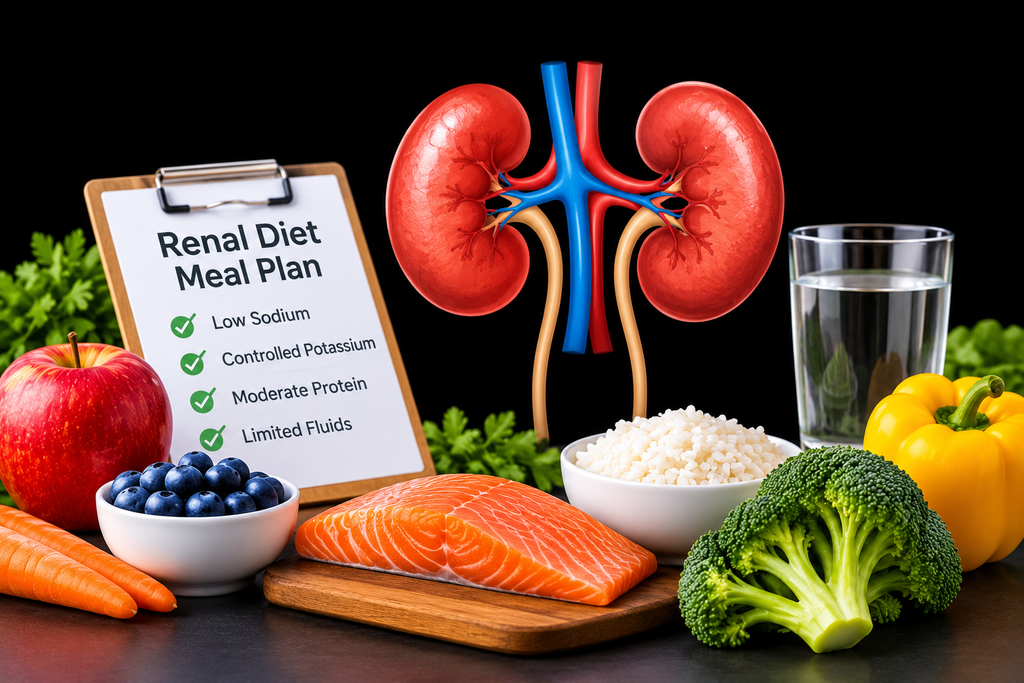
Helpful meal-planning tips:
- Cook at home to control sodium.
- Check food labels for added salt and phosphorus.
- Choose suitable portion sizes.
- Avoid salt substitutes without medical advice.
- Follow your prescribed protein and fluid intake.
Does Everyone with Kidney Disease Need the Same Renal Diet?
No. A renal diet varies according to kidney disease stage, blood test results, medications and treatment.
People with early-stage CKD may need fewer restrictions, while those with advanced kidney disease may require closer control of potassium, phosphorus, sodium and fluids. Dialysis patients may also need more protein to replace nutrients lost during treatment.
Your kidney disease renal diet should change when your medical needs change. Regular monitoring helps your healthcare team decide which foods and nutrients need adjustment.
What Is the Difference Between a Renal Diet and a Diet to Prevent Renal Calculi?
A renal diet for chronic kidney disease and a diet to prevent renal calculi (kidney stones) serve different purposes. A kidney disease diet manages nutrient levels when kidney function declines, while a kidney stone prevention diet reduces the risk of stone formation.
| Renal Diet | Kidney Stone Prevention Diet |
| Supports people with reduced kidney function | Helps prevent kidney stone formation |
| May limit potassium and phosphorus | May adjust sodium and oxalate intake |
| Protein needs depend on CKD stage and dialysis | May limit excess animal protein |
| Fluid intake may need restriction | Adequate fluids are often recommended |
A renal diet meal plan depends on kidney function and treatment needs. Kidney stone prevention also varies by stone type. Some people need less sodium or oxalate while maintaining adequate dietary calcium. However, people with kidney failure should follow their nephrologist’s fluid guidance rather than increasing water intake on their own.
About The Kidney MD
The Kidney MD is a specialized kidney care clinic in El Paso, Texas, offering diagnosis and long-term management of kidney conditions. The practice focuses on early detection, personalized treatment and patient education to support better kidney health and help patients manage their kidney disease diet needs.
Led by Dr. Saurabh A. Pande, MD, FNKF, FASN, a board-certified nephrologist with over 19 years of experience, the clinic provides care for chronic kidney disease, dialysis, hypertension and electrolyte disorders. The Kidney MD serves El Paso, Horizon City, Socorro, Sunland Park and nearby West Texas communities, with telehealth appointments available.
When Should You Consult a Nephrologist About Your Renal Diet?
Consult a nephrologist if you have kidney disease and need guidance on following a safe renal diet while meeting your nutritional needs.
Seek medical advice if you:
- Have been diagnosed with chronic kidney disease.
- Have abnormal potassium or phosphorus levels.
- Experience swelling or fluid retention.
- Have high blood pressure with kidney problems.
- Are starting dialysis or already receiving treatment.
- Need help understanding renal diet restrictions.
A nephrologist can review your kidney function and test results to recommend suitable dietary changes.
Why Choose The Kidney MD for Kidney Disease Management?
Choosing an experienced kidney specialist can make managing kidney disease easier. The Kidney MD provides specialized nephrology care focused on early diagnosis, personalized treatment and long-term kidney health.
Reasons patients choose the practice include:
- Experienced nephrologist: Dr. Saurabh A. Pande has more than 19 years of clinical experience.
- Board-certified expertise: He is certified in Internal Medicine and Nephrology.
- Comprehensive kidney care: Services include CKD, hypertension, dialysis and electrolyte disorder management.
- Personalized treatment: Care plans are based on individual medical needs.
- Convenient locations: East and Northeast El Paso offices serve local communities.
- Telehealth availability: Patients can access convenient virtual appointments.
The practice also emphasizes patient education, helping individuals understand their kidney conditions and make informed decisions about their renal diet and overall treatment.
Take the Next Step Toward Better Kidney Health
Managing kidney disease starts with understanding your nutritional needs and following an appropriate renal diet. If you are unsure about food choices, potassium levels or dietary restrictions, professional guidance can help you make safer decisions.
Schedule a consultation with The Kidney MD to discuss your kidney health and personalized treatment needs.
- East Location: 11163 La Quinta Pl, Suite A200, El Paso, TX 79936
- North East Location: 9101 Dyer St #102, El Paso, TX 79924
- Phone: 915-218-6055 | 855-270-8031
Conclusion
A balanced renal diet helps people with kidney disease manage sodium, potassium, phosphorus, protein and fluid intake. Choosing suitable foods and following personalized dietary recommendations can support nutritional health and help manage kidney-related complications.
However, every patient has different nutritional needs. Consult a nephrologist or renal dietitian before making major dietary changes. For specialized kidney care and guidance, The Kidney MD offers personalized nephrology services in El Paso, Texas.
FAQs – What Is a Renal Diet and Why Is It Important
Q1. What is a renal diet?
ANS. A renal diet is an eating plan that helps people with kidney disease manage sodium, potassium, phosphorus, protein and fluid intake.
Q2. What foods are best for kidney health?
ANS. Apples, berries, cabbage, cauliflower and cucumbers are common kidney-friendly foods. Suitable choices depend on your kidney function and blood test results.
Q3. What foods should you avoid with kidney disease?
ANS. Processed meats, salty snacks, canned soups and foods with phosphate additives may need to be limited in a kidney disease diet.
Q4. Can a renal diet improve kidney function?
ANS. A renal diet cannot reverse kidney damage but it can help manage blood pressure, fluid retention and mineral imbalances.
Q5. Can kidney patients eat bananas?
ANS. Yes, some kidney patients can eat bananas in moderation. However, those with high potassium levels may need to limit them.