

If you are experiencing kidney pain, urinary discomfort or severe flank pain, you may be unsure whether your symptoms are caused by kidney stones vs kidney infection. Although both conditions can cause back or side pain, nausea and urinary changes, their causes are different. Kidney stones are hard mineral deposits that can move through the urinary tract, while a kidney infection is usually caused by bacteria reaching the kidneys.
Understanding the difference between kidney stones and kidney infection can help you recognize important warning signs and seek appropriate medical care. Recognizing kidney stone symptoms and kidney infection symptoms can help you seek timely medical care. The Kidney MD offers personalized kidney care, accurate diagnosis and appropriate treatment for kidney-related conditions in El Paso.
Quick Insight: Kidney Stones vs Kidney Infection
The main difference between kidney stones and kidney infection is their cause. Kidney stones are mineral deposits that can block the urinary tract, while a kidney infection is usually caused by bacteria. Both can cause kidney pain but fever, chills and painful urination are more commonly associated with kidney infection symptoms, while severe, sharp or wave-like flank pain and blood in urine are common kidney stone symptoms.
What Are Kidney Stones?
Kidney stones are hard deposits of minerals and salts that form when urine becomes highly concentrated. Small stones may pass without symptoms, while larger stones can lodge in the ureter, causing severe kidney stone pain, urinary obstruction and other kidney stone symptoms.
What Causes Kidney Stones?
The causes of kidney stones can vary from person to person.
Common risk factors include:
- Not drinking enough fluids
- High sodium or animal-protein intake
- High levels of calcium, oxalate or uric acid in urine
- Family history of kidney stones
- Certain medical conditions
- Obesity and metabolic disorders
- Some medications
- Recurrent urinary tract infections, which can contribute to certain stones such as struvite stones
Common Kidney Stone Symptoms
Recognizing kidney stone symptoms early can help you seek timely medical evaluation and reduce the risk of complications.
Typical kidney stone symptoms may include:
- Severe kidney stone flank pain in the back or side
- Pain that may radiate toward the lower abdomen as the stone moves through the ureter
- Blood in urine kidney stones can cause urine to appear pink, red or brown
- Frequent or urgent urination
- Pain or burning during urination
- Nausea or vomiting
- Difficulty passing urine
- Cloudy or foul-smelling urine
Recognizing kidney stone symptoms and understanding the causes of kidney stones can help you seek timely kidney stone diagnosis and treatment, especially when severe pain or urinary obstruction occurs.
What Is a Kidney Infection?
A kidney infection, also called pyelonephritis, is a bacterial infection that affects one or both kidneys. It often develops when bacteria travel from the bladder through the urinary tract to the kidneys. Early treatment can help prevent serious kidney infection complications.
What Causes a Kidney Infection?
The main causes of kidney infection include:
- Bacteria spreading from a bladder infection
- Untreated or recurrent urinary tract infections
- Urinary blockage or obstruction
- Kidney stones that interfere with normal urine flow
- Certain urinary tract conditions
Common Kidney Infection Symptoms
Typical kidney infection symptoms may include:
- Fever and chills
- Persistent pain or tenderness in the back, side or below the ribs
- Frequent or painful urination
- Cloudy, dark, bloody or foul-smelling urine
- Nausea or vomiting
- Feeling tired or generally unwell
Because some kidney infection symptoms can overlap with kidney stone symptoms, proper medical evaluation is important for identifying the underlying condition and choosing the right treatment.
Kidney Stones vs Kidney Infection: Key Differences
The most important kidney stones vs kidney infection symptoms difference is the underlying cause. Kidney stones develop from mineral deposits, whereas a kidney infection is usually caused by bacteria. Their symptoms may overlap but certain patterns can provide useful clues.
| Category | Kidney Stones | Kidney Infection |
|---|---|---|
| Condition | Mineral deposits that form inside the kidneys | Infection affecting one or both kidneys |
| Causes | Dehydration, mineral buildup, diet, genetics and certain medical conditions | Usually bacteria spreading from the bladder or urinary tract |
| Pain | Pattern: Often severe, sharp and wave-like | Pattern: Often persistent or aching |
| Pain Location | Location: Side or back; may radiate toward the abdomen | Location: Back, side or below the ribs |
| Fever & Chills | Fever: Usually absent unless infection is present Chills: Uncommon without infection | Fever: Common Chills: Common |
| Urinary Symptoms | Blood: Common Painful urination: May occur Frequency: May increase | Blood: May occur Painful urination: Common Frequency: Common |
| Urine Changes | Blood, cloudy urine or unusual odor may occur | Cloudy, dark, bloody or foul-smelling urine may occur |
| Digestive Symptoms | Nausea/vomiting: Common with severe kidney stone pain | Nausea/vomiting: May occur with infection |
| Diagnosis | Urinalysis, blood tests, CT scan, ultrasound or other imaging | Urinalysis, urine culture, blood tests and imaging when needed |
| Treatment | Approach: Depends on stone size, location and severity; medication or stone removal may be needed | Approach: Usually antibiotics; additional treatment may be needed for complications |
Understanding kidney stones vs kidney infection and the difference between kidney stones and kidney infection is particularly important when symptoms include fever or chills. A suspected stone accompanied by infection symptoms should not be ignored and should be medically evaluated.
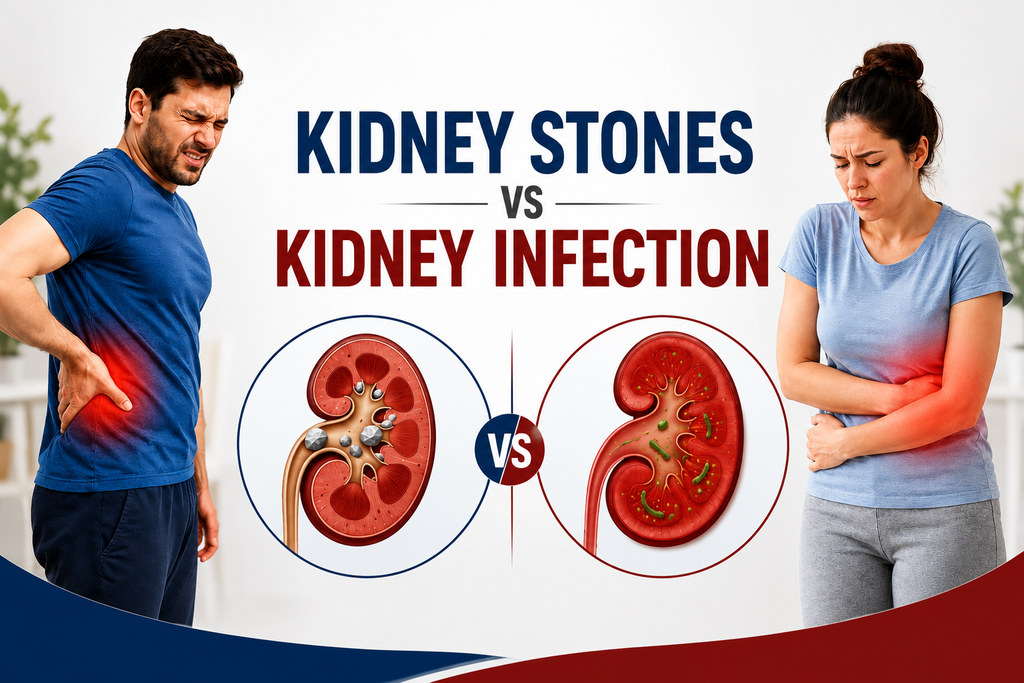
How Can You Tell If You Have Kidney Stones or Kidney Infection?
Symptoms can provide clues but they cannot confirm whether you have kidney stones or kidney infection. Severe, wave-like flank pain may suggest a stone, while fever, chills and urinary symptoms may suggest an infection. Urine tests, blood tests and imaging may be needed to determine the cause accurately.
Can Kidney Stones Cause a Kidney Infection?
Yes, kidney stones causing infection is possible, particularly when a stone blocks the normal flow of urine. A blocked urinary tract can create conditions that increase the risk of urinary infection.Untreated kidney stones can cause urinary tract infections, including kidney infections, particularly when they obstruct the normal flow of urine.
This makes kidney infection from kidney stones an important concern. If you have kidney stone symptoms along with fever, chills, vomiting or difficulty passing urine, seek prompt medical evaluation, as these symptoms may indicate an infection or urinary obstruction.
Source: National Institute of Diabetes and Digestive and Kidney Diseases (NIDDK) — Definition & Facts for Kidney Stones
Do Kidney Stones Cause Fever?
An uncomplicated kidney stone does not typically cause fever. When fever and kidney stones occur together, it may indicate an infection, especially if you also have chills, painful urination, vomiting, or feel seriously unwell. If you are concerned about kidney stones or kidney infection, it is advisable to seek medical evaluation rather than assuming the fever is caused by the kidney stone.
What Happens If Kidney Stones or Kidney Infection Are Left Untreated?
Untreated kidney stone complications can include urinary obstruction, recurrent urinary infections, severe pain and loss of kidney function in some cases. Early evaluation can help reduce the risk of these problems.
Untreated kidney infection complications can be more serious. Infection can spread beyond the urinary system and, in uncommon cases, lead to sepsis, which can be life-threatening.
What Can Be Mistaken for Kidney Stones or Kidney Infection?
Several conditions can cause symptoms similar to kidney stones vs kidney infection symptoms, including:
- Urinary tract infections (UTIs)
- Appendicitis
- Gallstones
- Muscle strain
- Gastrointestinal conditions
- Other urinary tract problems
Because symptoms can overlap, severe back or abdominal pain does not always indicate kidney stones and urinary discomfort does not necessarily mean a kidney infection.
Proper kidney stone diagnosis and kidney infection diagnosis can help identify the underlying cause.
How to Reduce Your Risk of Kidney Stones and Kidney Infection
Prevention for kidney stones vs kidney infection depends on the underlying cause and your individual risk factors.
Helpful steps include:
Kidney Stone Prevention
- Stay hydrated: Drink enough fluids to maintain healthy urine output.
- Limit excess sodium: High sodium intake can increase the risk of some kidney stones.
- Follow a balanced diet: Dietary changes may depend on your specific stone type.
- Maintain a healthy weight: A healthy lifestyle may help reduce kidney stone risk.
- Follow medical advice: If you have recurrent kidney stones, a nephrologist may recommend specific dietary or medication changes based on your individual risk factors.
Kidney Infection Prevention
- Treat UTIs promptly: Early treatment can help prevent infection from reaching the kidneys.
- Follow prescribed treatment: Complete antibiotics exactly as directed by your nephrologist.
- Address urinary problems: Conditions that interfere with normal urine flow may increase infection risk.
- Manage recurrent infections: Discuss recurring urinary symptoms with a healthcare professional.
- Seek timely care: Fever, chills, painful urination or flank pain may require medical evaluation for kidney infection symptoms.
Taking preventive steps and recognizing early kidney stones vs kidney infection symptoms can help reduce complications and support better long-term kidney health.
Kidney Stones vs Kidney Infection: Facts vs. Myths
#1 Myth: Kidney stones vs kidney infection are the same condition.
#1 Fact: They are different conditions with different causes and treatments.
#2 Myth: All kidney stone symptoms include fever.
#2 Fact: Fever is not a typical symptom of an uncomplicated kidney stone and may indicate an associated kidney infection.
#3 Myth: A kidney infection is another type of kidney stone.
#3 Fact: Kidney infections are usually caused by bacteria, while kidney stones are mineral deposits.
#4 Myth: Blood in urine always means kidney stones.
#4 Fact: Blood in urine can occur with several urinary conditions and requires medical evaluation.
#5 Myth: Every kidney stone requires surgery.
#5 Fact: Some small kidney stones can pass naturally without a procedure.
Expert Kidney Care at The Kidney MD
At The Kidney MD, patients receive personalized evaluation and evidence-based care for conditions affecting the kidneys and urinary system. For patients who also have chronic kidney disease or ongoing kidney-function concerns, our chronic kidney disease treatment in El Paso, TX provides personalized evaluation and long-term kidney care. Our team focuses on accurate diagnosis, appropriate treatment and long-term kidney health.
If you are experiencing symptoms that may indicate kidney stones vs kidney infection, professional evaluation can help identify the underlying cause and guide the right care. Serving El Paso and nearby West Texas communities, The Kidney MD is committed to accessible, patient-focused kidney care.
Kidney Stones vs Kidney Infection: How Are They Diagnosed?
At The Kidney MD, accurate kidney stone diagnosis and kidney infection diagnosis begin with a detailed evaluation because both conditions can cause similar urinary and pain-related symptoms.
Kidney Stone Diagnosis
For suspected kidney stones, diagnostic evaluation may include:
- Medical history and physical examination
- Urinalysis
- Blood tests
- CT scan
- Ultrasound or other imaging when appropriate
Urine tests can detect blood, crystals or signs of infection, while imaging can identify the stone’s size, location and possible urinary obstruction.
Kidney Infection Diagnosis
For suspected kidney infection, evaluation may include:
- Medical history and physical examination
- Urinalysis
- Urine culture
- Blood tests
- Imaging when clinically necessary
A urine culture can help detect bacterial infection and determine which antibiotics may be most appropriate for treatment.
At The Kidney MD, appropriate testing helps distinguish between kidney stones and kidney infection and supports timely, personalized treatment based on the underlying condition.
Kidney Stones vs Kidney Infection: Treatment
Treatment for kidney stones vs kidney infection depends on the underlying cause, severity and presence of urinary blockage or infection.
Kidney Stone Treatment
Kidney stone treatment may include:
- Hydration: Helps support the passage of small stones when appropriate.
- Pain Management: Helps control discomfort caused by kidney stones.
- Shock Wave Lithotripsy (ESWL): Uses shock waves to break stones into smaller fragments.
- Laser Stone Removal: Uses laser technology to break or remove stones when a procedure is needed.
Kidney Infection Treatment
Kidney infection treatment may include:
- Antibiotics: Used to treat bacterial kidney infections.
- Fluids: Help maintain hydration during recovery.
- Hospital Care: May be required for severe infections or complications.
Because kidney stone treatment and kidney infection treatment are different, accurate diagnosis is important and The Kidney MD provides personalized care based on each patient’s condition.

Why Choose The Kidney MD for Kidney Care?
When symptoms may point to kidney stones vs kidney infection, timely evaluation can help identify the underlying condition and guide appropriate care. The Kidney MD provides personalized kidney care focused on accurate diagnosis, evidence-based treatment and long-term kidney health.
Why Patients Choose The Kidney MD
- Personalized evaluation for kidney stone symptoms and kidney infection symptoms
- Comprehensive kidney health assessment and diagnostic testing
- Evidence-based management for kidney-related conditions
- Individualized treatment plans based on each patient’s needs
- Patient-focused approach with clear communication
- Kidney care for patients in El Paso and nearby West Texas communities
- Support for ongoing kidney health and preventive care
With a focus on personalized care and appropriate evaluation, The Kidney MD helps patients take informed steps toward better kidney health and timely treatment.
Take the Next Step for Your Kidney Health with The Kidney MD
If you are experiencing persistent kidney pain, urinary symptoms, severe flank pain, fever or other concerns related to kidney stones vs kidney infection, contact The Kidney MD for professional evaluation and personalized kidney care in El Paso.
Contact Information
The Kidney MD
Address: East Location, 11163 La Quinta Pl, Suite A200, El Paso, TX 79936
North East Location, 9101 Dyer St #102, El Paso, TX 79924
Call: 915-218-6055
Email: contactus@thekidneymd.com
Final Thoughts: Kidney Stones vs Kidney Infection
Understanding kidney stones vs kidney infection is important because the two conditions can produce similar kidney pain and urinary symptoms but require different treatment. Kidney stones are mineral deposits that may cause severe flank pain and urinary obstruction, while kidney infections are usually bacterial and commonly cause fever, chills, painful urination and nausea.
If you are experiencing kidney stone symptoms or kidney infection symptoms, do not rely on symptoms alone to determine the cause. Professional evaluation at The Kidney MD can help identify whether you have a stone, infection, obstruction or another condition and guide the appropriate kidney stone treatment or kidney infection treatment.
FAQs – Kidney Stones vs Kidney Infection: Symptoms, Causes & Key Differences
Q1. What is the difference between kidney stones and kidney infection?
Ans. Kidney stones vs kidney infection differs mainly in cause: stones are mineral deposits, while kidney infections are usually bacterial.
Q2. Can kidney stones cause a kidney infection?
Ans. Yes. Kidney stones can increase infection risk when they block normal urine flow. The Kidney MD can evaluate symptoms and complications.
Q3. Do kidney stones cause fever?
Ans. Kidney stones do not usually cause fever on their own. If fever occurs with kidney stone symptoms, it may indicate an associated infection and should be medically evaluated.
Q4. How are kidney stones and kidney infections diagnosed?
Ans. Kidney stone diagnosis may involve urine tests and imaging, while kidney infection evaluation commonly includes urinalysis and urine culture. The Kidney MD provides personalized kidney care.
Q5. Which is more serious, kidney stones vs kidney infection?
Ans. Both kidney stones vs kidney infection can become serious when untreated. An obstructing stone with infection or a severe kidney infection may require timely medical attention.