

Alport syndrome can sometimes begin with a finding that seems easy to overlook—blood in the urine. This inherited condition mainly affects the kidneys but may also involve hearing and vision. Recognizing alport syndrome symptoms early can help patients and families seek appropriate kidney evaluation and ongoing care.
The condition is linked to changes in the COL4A3, COL4A4, or COL4A5 genes. Blood in the urine is a common early finding, while protein in the urine and changes in kidney function may develop over time. Understanding the alport syndrome causes, diagnosis and treatment can help patients better understand the condition and long-term kidney care.
What Is Alport Syndrome?
This rare inherited condition is caused by changes in genes that help produce type IV collagen. This collagen is important for the normal structure of tissues in the kidneys, inner ear and eyes.
The condition can be inherited in different ways, including X-linked, autosomal recessive and autosomal dominant forms. Its effects can vary between individuals, which is why alport syndrome diagnosis and long-term monitoring are important for affected families.
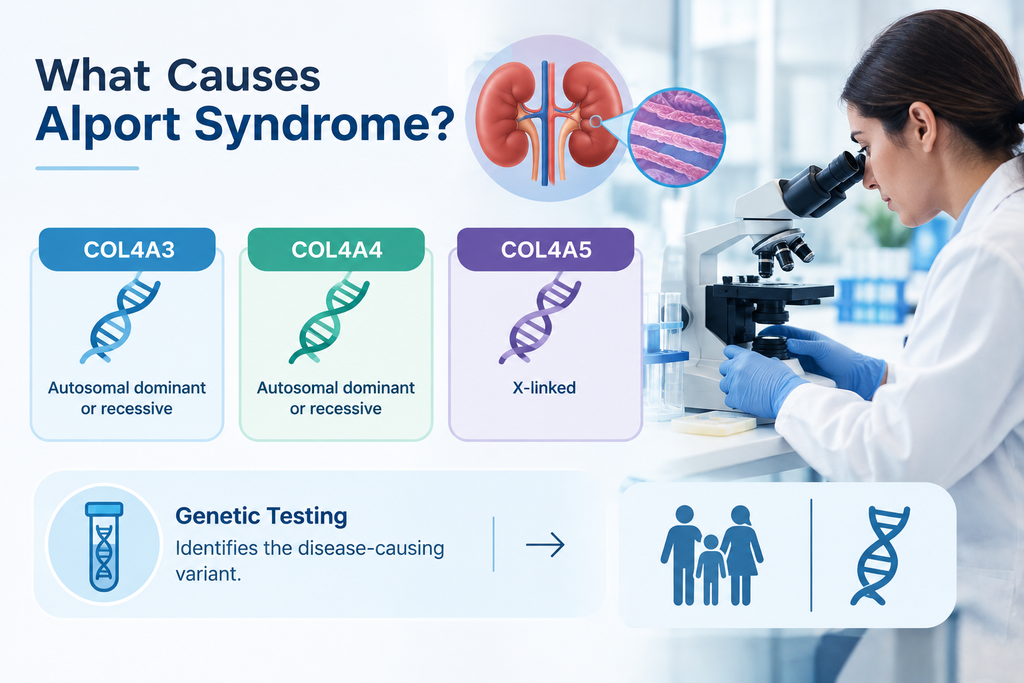
What Causes Alport Syndrome?
The condition results from disease-causing variants in the COL4A3, COL4A4 or COL4A5 genes. These genes are involved in producing type IV collagen, which helps maintain the structure of tissues in the kidneys, inner ear and eyes.
- COL4A3: Can be associated with autosomal dominant or autosomal recessive disease.
- COL4A4: Can be associated with autosomal dominant or autosomal recessive disease.
- COL4A5: Is associated with X-linked alport syndrome.
The condition can therefore follow X-linked, autosomal recessive or autosomal dominant inheritance patterns.
Reference: GeneReviews – Alport Syndrome, National Center for Biotechnology Information (NCBI)
What Are the Symptoms of Alport Syndrome?
Alport syndrome symptoms can vary from person to person, but kidney-related signs are often noticed first. Some people may also develop hearing or eye changes, making awareness of these symptoms important for timely evaluation.
- Blood in the urine (hematuria): Often an early sign and may only be detected through testing.
- Protein in the urine (proteinuria): Can develop as kidney involvement progresses.
- High blood pressure: May occur as kidney function is affected.
- Reduced kidney function: Can develop over time in some individuals.
- Swelling: May occur with significant kidney involvement.
- Hearing loss: Sensorineural hearing loss can develop, particularly in some genetic forms.
- Eye changes: Certain abnormalities, including anterior lenticonus and retinal changes, may occur.
Recognizing these symptoms can help you understand when alport syndrome diagnosis may be needed, especially if there is a family history of inherited kidney disease.
Reference: National Kidney Foundation: Alport Syndrome – National Kidney Foundation; GeneReviews – Alport Syndrome, NCBI
How Is Alport Syndrome Diagnosed?
Alport syndrome diagnosis usually starts with a review of symptoms, family history and kidney test results. Doctors may look for persistent blood or protein in the urine and other signs that suggest an inherited kidney condition.
Common tests may include:
- Urine tests for blood and protein
- Blood tests for kidney function
- Hearing and eye examinations
- Genetic testing
- Kidney biopsy in selected cases
Genetic testing can help confirm the underlying genetic changes and clarify the diagnosis.
How Is Alport Syndrome Treated?
Alport syndrome treatment focuses on protecting kidney health and managing problems as they develop. The approach depends on the person’s kidney function, symptoms and overall health.
Treatment may include:
- Medicines to reduce protein loss and control blood pressure
- Regular kidney health checks
- Hearing or eye support when needed
- Dialysis or kidney transplantation if advanced kidney failure occurs
The goal of care is to slow disease progression, manage related health concerns and support long-term kidney health.
Does Alport Syndrome Always Cause Kidney Failure?
No, the condition does not cause kidney failure in every person. The risk and age of progression can differ based on the genetic form and individual factors. Some people develop significant kidney disease earlier, while others may experience a slower course.
Regular follow-up can help track changes in kidney function and identify worsening kidney disease early.
Kidney Care at The Kidney MD
The Kidney MD provides specialized kidney care in El Paso for patients with complex and chronic kidney conditions. For individuals with alport syndrome kidney disease, care may involve reviewing medical and family history, kidney test results, symptoms, and overall health to develop an appropriate care plan. Patients with inherited conditions can also explore inherited kidney disorder treatment in El Paso for specialized evaluation and long-term management.
With a patient-focused approach, The Kidney MD helps individuals understand their condition, monitor their kidney health, and navigate long-term nephrology care based on their individual needs.

Need Help With Your Kidney Health?
If you have this inherited kidney condition, persistent blood or protein in your urine or concerns about inherited kidney disease, professional evaluation can help you understand your condition and care options.
The Kidney MD provides personalized kidney care in El Paso focused on your individual needs and long-term kidney health.
Schedule a consultation with The Kidney MD to discuss your kidney health.
Contact Information
The Kidney MD
Address: East Location, 11163 La Quinta Pl, Suite A200, El Paso, TX 79936
North East Location, 9101 Dyer St #102, El Paso, TX 79924
Call: 915-218-6055
Email: contactus@thekidneymd.com
Final Thoughts
This inherited condition can affect the kidneys and, in some people, hearing and vision. Recognizing alport syndrome symptoms such as blood or protein in the urine can support timely evaluation and help patients understand when specialist kidney care may be needed.
While alport syndrome treatment cannot correct the underlying genetic change, appropriate care can help manage complications and support kidney health. The risk of alport syndrome and kidney failure varies between individuals. The Kidney MD can provide personalized nephrology care for patients seeking guidance about their kidney health.
FAQs – Alport Syndrome: Symptoms, Causes and Kidney Care
Q1. What Is the triad of alport syndrome?
Ans. The classic alport syndrome triad includes kidney disease, sensorineural hearing loss, and characteristic eye abnormalities. However, not everyone develops all three features, and their severity can vary between individuals.
Q2. What are the signs and symptoms of alport syndrome?
Ans. Common symptoms include blood in the urine, protein in the urine and progressive changes in kidney function. Some people may also develop hearing loss or eye abnormalities. Symptoms and their severity can vary depending on the genetic form of the condition.
Q3. At what age does alport syndrome usually appear?
Ans. Alport syndrome symptoms can appear during childhood, with blood in the urine often being an early sign. Other features, such as hearing loss or declining kidney function, may develop later. The age of onset can vary depending on the genetic form and individual disease progression.
Q4. What are the three most common genetic types of alport syndrome?
Ans. The three main genetic forms are X-linked Alport syndrome, usually associated with the COL4A5 gene and autosomal forms associated with COL4A3 or COL4A4. These include X-linked, autosomal recessive, and autosomal dominant inheritance patterns.
Q5. What causes alport syndrome?
Ans. The main causes are disease-causing changes in the COL4A3, COL4A4, or COL4A5 genes. These genes help produce type IV collagen, which supports important structures in the kidneys, inner ear and eyes.