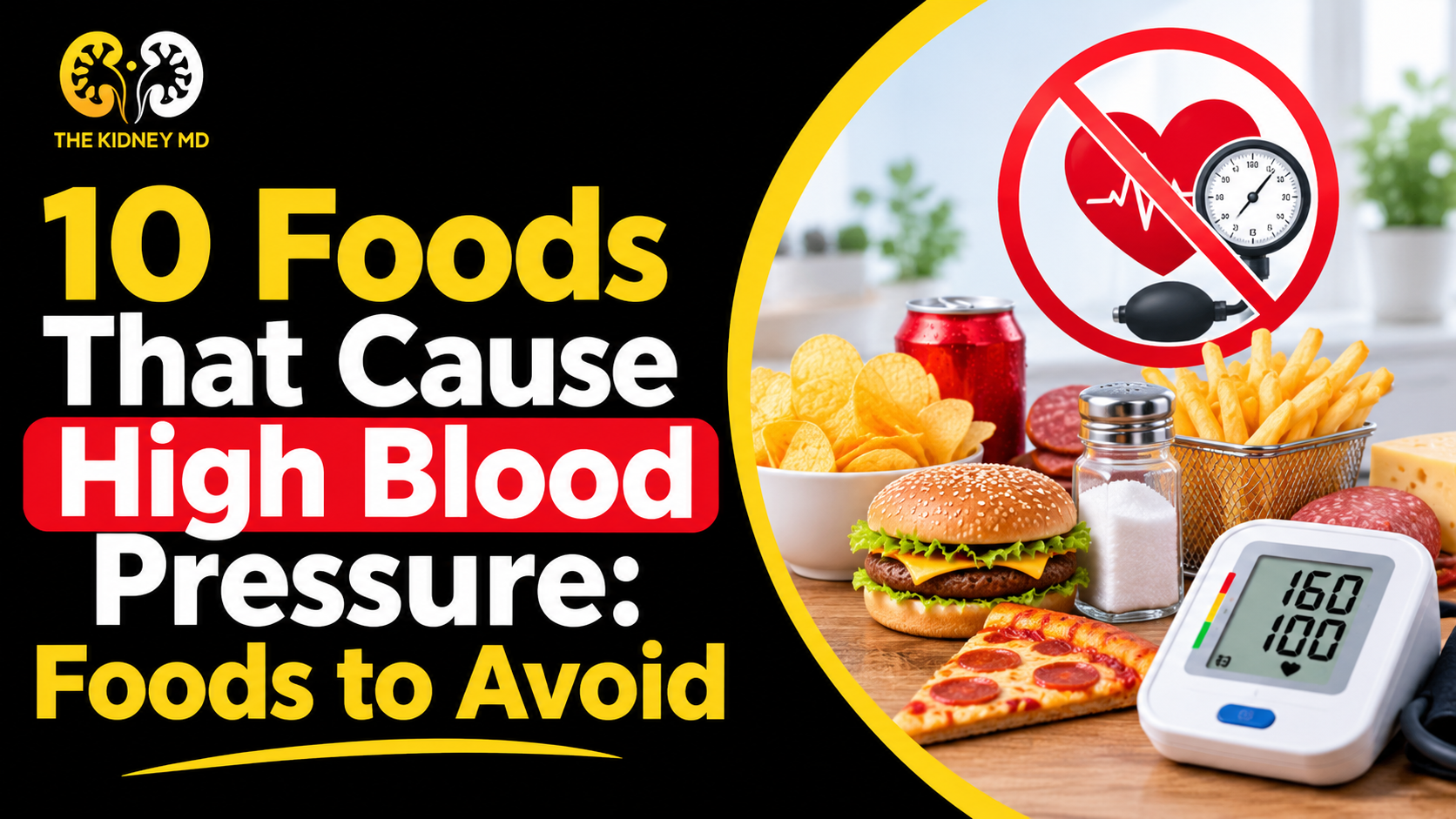
Are you searching for Foods That Cause High Blood Pressure? Your daily food choices can affect blood pressure, especially when meals contain excess sodium, added sugar and processed ingredients. Understanding what foods cause high blood pressure can help you make healthier dietary choices.
High blood pressure can affect your heart and kidneys over time. Knowing which foods to avoid with high blood pressure and following a blood pressure-friendly diet may help manage hypertension and support long-term kidney health.
Quick Insight: What Foods Cause High Blood Pressure?
Foods that may contribute to high blood pressure include processed meats, fast food, salty snacks, canned soups, instant noodles, packaged meals, pickles and high-sodium sauces. Sugary drinks and heavily processed foods may also affect cardiovascular health. If you’re wondering what foods raise blood pressure, limiting excess sodium and following a balanced diet can support better blood pressure management.
What Is the Connection Between Food and High Blood Pressure?
Your diet can affect blood pressure, especially when you regularly eat foods high in sodium, added sugar and processed ingredients. Excess sodium causes fluid retention, which may increase blood pressure.
Understanding what foods raise blood pressure can help you limit hidden salt in packaged meals, snacks and restaurant foods while supporting heart and kidney health.
15 Foods That Cause High Blood Pressure: Foods You May Need to Limit
If you are concerned about Foods That Cause High Blood Pressure, pay attention to foods high in sodium, added sugar and unhealthy fats. Understanding what foods cause high blood pressure can help you make healthier choices and support your heart and kidney health.
1. Processed Meats
Bacon, sausages, hot dogs, ham and deli meats often contain high amounts of sodium and preservatives. These are common foods that raise blood pressure when eaten frequently.
Better choices: Fresh chicken, fish or lean homemade meats with less added salt.
2. Fast Food
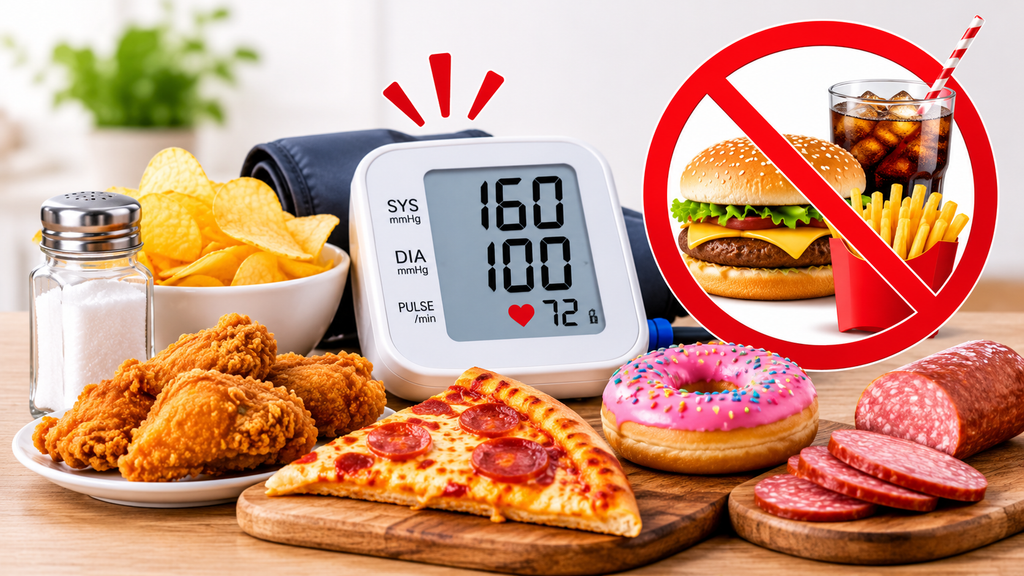
Burgers, fries, pizza and fried chicken often contain excess sodium and saturated fats. Regular consumption may contribute to weight gain and make hypertension harder to manage.
Better choices: Homemade grilled meals with vegetables and whole grains.
3. Salty Snacks
Chips, pretzels, crackers and flavoured popcorn can increase your daily sodium intake. If you wonder can salty food raise blood pressure, these are common examples.
Better choices: Unsalted popcorn, fresh vegetables or unsalted nuts.
4. Sugary Drinks
Sodas, sweetened juices, sports drinks and sweet tea contain added sugar. Frequent consumption may contribute to weight gain and increase the risk of conditions linked to hypertension.
Better choices: Water, sparkling water without added sugar or unsweetened tea.
5. Energy Drinks
Energy drinks contain caffeine and other stimulants that may temporarily increase blood pressure. Their high sugar content can also affect overall health.
Better choices: Water or unsweetened beverages.
6. Processed Frozen Meals
Frozen dinners and ready-to-eat meals often contain high sodium levels. Eating them regularly can make it harder to control your daily salt intake.
Better choices: Freshly prepared meals with vegetables and lean protein.
7. Canned Soups and Vegetables
Many canned soups and vegetables contain added salt for flavour and preservation. Frequent consumption may increase your sodium intake.
Better choices: Homemade soups, fresh vegetables or no-salt-added canned products.
8. Excess Red Meat
Fatty cuts of red meat can contain saturated fat. Large portions and frequent consumption may not support a heart-healthy diet. If you wonder does red meat cause high blood pressure, preparation, portion size and overall eating habits matter.
Better choices: Fish, skinless poultry or suitable plant-based proteins.
9. Processed Cheese
Cheese slices, spreads and flavoured cheese products may contain considerable sodium and saturated fat. Eating them frequently can increase your daily salt intake.
Better choices: Small portions of fresh, lower-sodium cheese, if suitable.
10. Candy and Sweets
Candy, cookies and cakes are often high in added sugar. Eating them frequently may contribute to weight gain and metabolic problems associated with hypertension.
Better choices: Fresh fruit or unsweetened yogurt, depending on your dietary needs.
11. Pickles and Preserved Foods
Pickles, olives and preserved vegetables are often stored in salty brine. These foods that raise blood pressure can increase sodium intake when consumed regularly.
Better choices: Fresh cucumber, homemade salads or lower-sodium alternatives.
12. Instant Noodles
Instant noodles and seasoning packets can contain high amounts of sodium. Using the entire seasoning packet may add excessive salt to one meal.
Better choices: Homemade noodles with fresh vegetables and less added salt.
13. High-Sodium Sauces and Condiments
Soy sauce, ketchup, barbecue sauce and packaged dressings can contain hidden sodium. These are important foods to avoid with high blood pressure when consumed in large amounts.
Better choices: Use smaller portions and flavour meals with lemon, garlic, herbs or vinegar.
14. Salted and Smoked Fish
Salted, smoked and preserved fish may contain considerable sodium. The preparation method can make a difference to their suitability for people with hypertension.
Better choices: Fresh fish prepared by grilling, baking or steaming with less salt.
15. Restaurant and Takeaway Foods
Restaurant meals often contain hidden sodium in sauces, marinades and seasonings. Regularly eating these meals may increase your intake of foods that trigger high blood pressure.
Better choices: Choose grilled meals, request sauces separately and ask for less added salt.
Who Should Be Especially Careful About Foods That Cause High Blood Pressure?
Some people may need closer attention to their diet because of existing health conditions. These include:
- People with chronic kidney disease (CKD).
- People with diabetes.
- People with existing hypertension.
- People receiving dialysis.
- Kidney transplant recipients.
- Older adults with other medical conditions.
Every diet should suit your kidney function, blood pressure and overall health. Knowing what foods to avoid if you have high blood pressure can help you make healthier choices.
Common Myths About Foods That Cause High Blood Pressure
Myth: One Salty Meal Always Causes Hypertension
Fact: A high-sodium meal may temporarily affect blood pressure in some people but one meal does not automatically cause chronic hypertension.
Myth: Everyone with High Blood Pressure Must Stop Eating All Salt
Fact: Reducing excess sodium is important but your diet should remain balanced and personalised. Follow your healthcare professional’s recommendations.
Myth: All Protein-Rich Foods Raise Blood Pressure
Fact: Protein is an essential nutrient. The type and amount of protein matter, particularly for people with kidney disease. Do not restrict protein without medical guidance.
Myth: Drinking More Water Can Cure High Blood Pressure
Fact: Adequate hydration supports general health but drinking more water is not a treatment for hypertension. People with advanced kidney disease may also need individual fluid guidance.
Lifestyle Tips to Help Manage High Blood Pressure
Diet is one part of blood pressure management. Other healthy habits can also support heart and kidney health.
- Reduce sodium intake: Limit heavily processed foods and check nutrition labels.
- Monitor blood pressure: Keep track of your readings and follow your treatment plan.
- Manage diabetes: Follow your healthcare professional’s advice for blood sugar control.
- Maintain a healthy weight: Choose balanced meals and regular physical activity.
- Stay active: Exercise according to your ability and medical advice.
- Avoid smoking: Smoking can damage blood vessels and affect kidney health.
- Take prescribed medicines: Do not stop or change your medicines without medical advice.
When Should You See a Nephrologist?
High blood pressure can damage kidney function, while kidney problems may also cause hypertension. Understanding Foods That Cause High Blood Pressure is helpful but persistent high readings require medical attention.
Consult a nephrologist if you experience:
- Repeated high blood pressure readings.
- Diabetes or existing kidney disease.
- Swelling in your feet, ankles or face.
- Abnormal creatinine or eGFR results.
- Changes in urination.
- A family history of kidney disease.
Early medical evaluation can help identify kidney problems and support timely treatment.
Manage High Blood Pressure with Expert Care at The Kidney MD
High blood pressure and kidney health are closely connected. If you have persistent hypertension, abnormal kidney function tests or concerns about your health, timely medical evaluation can help identify possible causes and guide your care.
At The Kidney MD, patients can receive specialised evaluation and care for hypertension, chronic kidney disease and other kidney-related conditions. Schedule a consultation with a nephrology specialist in El Paso, TX, to discuss your blood pressure, understand your kidney function and receive personalised recommendations.
Conclusion
Understanding Foods That Cause High Blood Pressure can help you make healthier dietary choices and manage hypertension. Limiting foods high in sodium, added sugars and unhealthy fats may support better blood pressure control and protect your heart and kidneys. Combining a balanced diet with regular exercise and healthy lifestyle habits can also make a difference.
If you have persistent high blood pressure or concerns about kidney health, professional guidance is important. The Kidney MD, led by Dr. Saurabh Pande in El Paso, TX, provides specialised nephrology and hypertension care. Consult their team for personalised guidance to help manage blood pressure and support long-term kidney health.
FAQs: Foods That Cause High Blood Pressure
Q1. What Are the 5 Worst Foods for High Blood Pressure?
Ans. Processed meats, salty snacks, canned soups, instant noodles and fast food are high in sodium and should be limited.
Q2. What Is the Number One Food That Causes High Blood Pressure?
Ans. There is no single food responsible for hypertension but high-sodium processed foods can increase blood pressure.
Q3. Can One Salty Meal Raise Blood Pressure?
Ans. Yes. A high-sodium meal may temporarily raise blood pressure, especially in salt-sensitive individuals.
Q4. Does Sugar Cause High Blood Pressure?
Ans. Excess added sugar may contribute to weight gain and metabolic problems linked to high blood pressure.
Q5. Can Energy Drinks Raise Blood Pressure?
Ans. Yes. Caffeine and other stimulants in energy drinks may temporarily increase blood pressure.