
Are you looking for ways to protect your dialysis access in El Paso between treatments? Proper dialysis access care, daily hygiene and regular checks can help maintain healthy blood flow and reduce the risk of infections and other complications.
If you receive hemodialysis, understanding how to protect your dialysis access in El Paso can help support safer and more effective treatment. At The Kidney MD, Dr. Saurabh A. Pande provides specialized kidney care and dialysis management in El Paso, helping patients manage their kidney health through personalized care and medical guidance.
What Is Dialysis Access and Why Is It Important?
Dialysis access in El Paso refers to the pathway that allows blood to travel between your body and a dialysis machine during hemodialysis. It provides the blood flow needed to remove waste products and excess fluid when your kidneys cannot perform these functions effectively. Proper dialysis access care helps maintain healthy blood flow and reduce the risk of complications.
There are three main types of hemodialysis access:
1. Arteriovenous (AV) Fistula
An AV fistula is created through surgery by connecting an artery to a vein, usually in the arm. This connection increases blood flow through the vein, making it stronger and larger over time.
A fistula is generally preferred because it tends to last longer and has a lower risk of infection and clotting than other access types. Regular dialysis fistula care helps keep it healthy and functioning properly.
2. Arteriovenous (AV) Graft
An AV graft uses a soft, flexible tube to connect an artery and a vein. It is often used when a person’s veins are not suitable for creating a fistula. Proper dialysis graft care helps maintain its function and reduce the risk of complications.
3. Central Venous Catheter
A central venous catheter is a soft tube placed into a large vein, usually in the neck or chest. It connects directly to the dialysis machine without requiring needles in an arm fistula or graft.
Catheters have a higher risk of bloodstream infections, making proper hygiene and dressing care especially important. Following your care team’s instructions is an essential part of dialysis access maintenance.
Why Is It Important to Protect Your Dialysis Access Between Treatments?
Protecting your dialysis access in El Paso between treatments helps maintain healthy blood flow and reduces the risk of complications.
Here are some important benefits of proper dialysis access maintenance:
- Helps prevent infections: Keeping the access area clean reduces exposure to germs and lowers the risk of infection.
- Supports healthy blood flow: Daily checks can help identify unusual changes in your dialysis access early.
- Reduces clotting risks: Recognizing changes promptly may help prevent serious blood clots or blockages.
- Prevents physical damage: Avoiding pressure, heavy lifting and injuries helps protect your dialysis access.
- Supports effective dialysis: A healthy access helps your care team deliver your prescribed dialysis treatment safely and effectively.
Regular dialysis access care can help protect your access and support your overall treatment.
How to Protect Your Dialysis Access Between Treatments
Following simple dialysis access care tips can help protect your dialysis access in El Paso and reduce the risk of infection or injury.
1. Keep Your Access Site Clean
Good hygiene helps prevent dialysis access infections.
- Wash your hands before touching your access.
- Clean the fistula or graft as instructed.
- Avoid scratching the skin or picking at scabs.
- Keep the surrounding skin clean.
- Follow your care team’s bathing instructions.
For catheters, keep the dressing clean and dry. Never remove it without medical guidance.
2. Check Your Access Every Day
Daily dialysis access monitoring helps identify problems early.
- Feel for the vibration (thrill) in your fistula or graft.
- Check for redness, swelling, warmth, pain or drainage.
- Watch for unusual bleeding.
- Contact your dialysis team immediately if the vibration weakens or disappears.
For catheters, check that the dressing remains clean, dry and secure.
3. Avoid Pressure on Your Access Arm
Follow these AV fistula care precautions to maintain healthy blood flow:
- Avoid sleeping on your access arm.
- Do not wear tight sleeves, watches or bracelets.
- Avoid carrying heavy bags with your access arm.
- Keep heavy objects away from the access site.
- Protect your arm during exercise and daily activities.
4. Follow Proper Catheter Care Instructions
If you have a central venous catheter, follow these dialysis catheter care tips:
- Keep the dressing clean, dry and secure.
- Avoid pulling or twisting the catheter.
- Never open catheter connections yourself.
- Follow your care team’s bathing instructions.
- Report wet, loose or damaged dressings promptly.
5. Follow Your Dialysis Team’s Instructions
Proper dialysis access maintenance depends on your access type and medical condition. Attend scheduled appointments and follow your healthcare provider’s recommendations.
Ask your dialysis team to demonstrate how to check your access and recognize warning signs.
What Should You Avoid If You Have Dialysis Access?
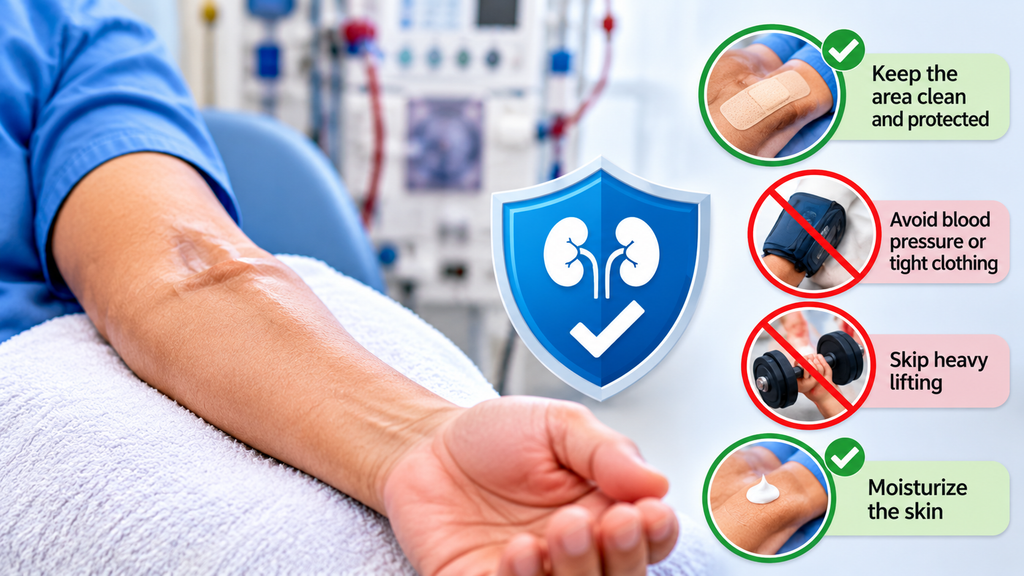
Certain activities can increase the risk of injury or interfere with blood flow through your access. Following proper dialysis access care in El Paso can help prevent complications and protect your access between treatments.
Avoid these common mistakes:
- Blood pressure checks: Do not allow routine blood pressure measurements on your access arm.
- Blood draws and IV insertions: Avoid these procedures in the access arm unless your care team specifically approves.
- Tight clothing: Avoid tight sleeves, watches and bracelets that put pressure on the access.
- Heavy lifting: Avoid carrying heavy objects that strain or press against the access arm.
- Scratching: Do not scratch the access area or remove scabs.
- Ignoring symptoms: Never overlook pain, swelling, redness or changes in the usual vibration.
Following these AV fistula care precautions and proper dialysis access maintenance can help reduce the risk of damage and support healthy blood flow.
Warning Signs of Dialysis Access Problems You Should Never Ignore
Even with proper dialysis access maintenance, complications can occur. Recognizing warning signs helps prevent serious problems.
Signs of Dialysis Access Infection
Common dialysis access infection symptoms include:
- Redness, swelling or warmth
- Pain or tenderness
- Pus or unusual drainage
- Fever or chills
Contact your healthcare provider promptly if you notice these symptoms.
Signs of Blood Clots or Reduced Blood Flow
Watch for these dialysis access complications:
- Weak or missing vibration in your fistula or graft
- Swelling or pain in the access arm
- Changes in blood flow during dialysis
Contact your dialysis team immediately if the usual vibration disappears.
Signs of Bleeding or Access Damage
Unusual bruising, prolonged bleeding or skin changes may indicate access problems. Apply firm pressure if bleeding occurs. Call 911 for heavy or uncontrolled bleeding.
About The Kidney MD
The Kidney MD, led by Dr. Saurabh A. Pande, MD, FNKF, FASN, provides specialized nephrology care in El Paso, TX. With over 19 years of medical experience and board certifications in Internal Medicine and Nephrology, Dr. Pande offers personalized care for various kidney conditions.
The practice provides services including CKD management, dialysis care, hypertension treatment, kidney transplant care and electrolyte disorder management. Patients can access care at its East and Northeast El Paso locations.
When Should You Contact a Nephrologist About Dialysis Access?
Contact your nephrologist or dialysis center if you notice signs of dialysis access problems, such as:
- Missing or weakened vibration in your fistula or graft
- Redness, swelling, pain or unusual drainage
- Fever or chills
- Prolonged bleeding after dialysis
- A wet or damaged catheter dressing
- Difficulty using your access during treatment
Do not ignore these dialysis access complications or wait until your next session. Heavy bleeding, chest pain or difficulty breathing requires immediate emergency medical care.
Regular dialysis access monitoring helps identify problems early and protect your access.
Why Choose The Kidney MD for Dialysis Care in El Paso?
Choosing an experienced kidney care provider can help you manage your dialysis access in El Paso and understand how to protect it between treatments.
Here is why patients may consider The Kidney MD:
- Experienced nephrologist: Dr. Saurabh A. Pande has more than 19 years of medical experience and board certifications in Internal Medicine and Nephrology.
- Specialized dialysis management: The practice provides care for patients receiving hemodialysis and peritoneal dialysis.
- Personalized treatment: Care plans are tailored to each patient’s medical needs.
- Comprehensive kidney care: Services include CKD management, hypertension treatment, electrolyte disorders and kidney transplant evaluation.
- Convenient locations: Patients can visit two offices in El Paso.
- Telehealth options: Audio and audio/video appointments are available.
The Kidney MD focuses on helping patients understand their kidney health, manage dialysis access care and make informed decisions about their treatment.
Get Expert Dialysis Access Care in El Paso with The Kidney MD
Proper dialysis access care helps maintain healthy blood flow and prevent complications. If you notice unusual changes in your fistula, graft or catheter, seek medical advice promptly.
The Kidney MD, led by Dr. Saurabh A. Pande, provides specialized dialysis care in El Paso and personalized guidance to help patients protect their dialysis access and manage kidney health. Contact the team to schedule an appointment.
Call: 915-218-6055
Email: contactus@thekidneymd.com
East Location: 11163 La Quinta Pl, Suite A200, El Paso, TX 79936
Northeast Location: 9101 Dyer St #102, El Paso, TX 79924
Conclusion
Protecting your dialysis access between treatments is essential for safe and effective hemodialysis. Regular dialysis access monitoring, proper hygiene and avoiding pressure on the access site can help prevent infections, blood clots and other complications. Watch for warning signs such as redness, swelling, pain or a missing vibration and seek medical attention promptly.
For expert dialysis care in El Paso, The Kidney MD offers specialized nephrology services and personalized treatment. Dr. Saurabh A. Pande and his team provide guidance on dialysis access maintenance and AV fistula care to help patients protect their access and manage kidney health.
FAQs – How to Protect Your Dialysis Access in El Paso Between Treatments
Q1. How often should I check my dialysis access at home?
ANS. Check your access daily for its usual vibration, redness, swelling, pain or drainage. Regular dialysis access monitoring helps identify problems early.
Q2. How can I prevent infection in my dialysis access?
ANS. Wash your hands before touching the access, keep the area clean and follow proper dialysis access infection prevention practices recommended by your care team.
Q3. Can I sleep on the arm with my dialysis fistula?
ANS. Avoid sleeping on your fistula arm because pressure can affect blood flow. Follow proper AV fistula care precautions to protect your access.
Q4. What should I do if I cannot feel the vibration in my fistula?
NS. Contact your dialysis center immediately. A missing vibration may indicate reduced blood flow or a blockage
Q5. What are the common signs of dialysis access infection?
ANS. Common dialysis access infection symptoms include redness, swelling, warmth, pain, unusual drainage, fever and chills. Seek prompt medical attention