
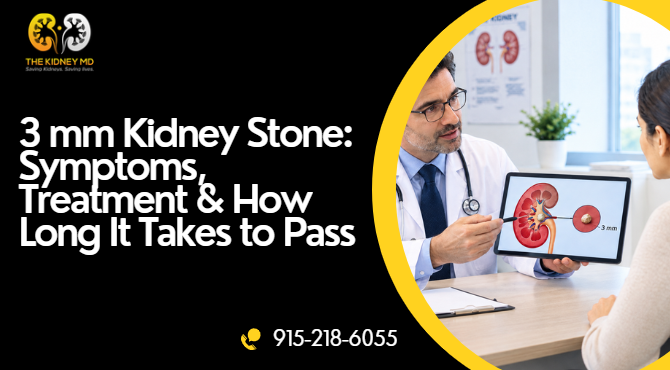
Have you been diagnosed with a 3 mm kidney stone and wondering what happens next? You may want to know whether it can pass naturally, how painful it may be and how long the process could take. A 3 mm stone is generally considered small and many small stones can pass through the urinary tract without a procedure.
However, size is not the only factor that matters. The stone’s location, movement and effect on urine flow can influence your symptoms and treatment. Understanding 3 mm kidney stone symptoms can help you know when to monitor the stone and when to seek medical care.
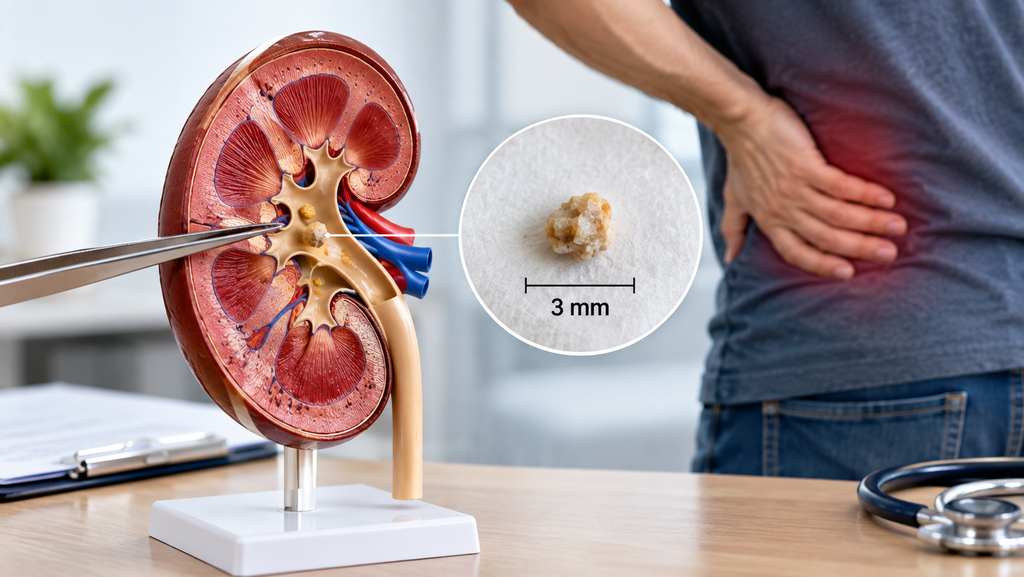
A 3 mm stone is a small, hard deposit that forms when certain substances in urine become concentrated and form crystals.
What Is a 3 mm Kidney Stone?
Kidney stones can vary in size and location. A small stone may cause no symptoms while it remains in the kidney. Symptoms may become more noticeable when the stone moves into the ureter.
Kidney stones can vary in size and location. A small stone may cause no symptoms while it remains in the kidney. Symptoms may become more noticeable when the stone moves into the ureter.
Is a 3 mm Kidney Stone Considered Large?
No. A 3 mm stone is generally considered small. However, even a small stone can cause significant symptoms if it moves through the ureter or interferes with urine flow.
What are the Symptoms of a 3 mm Kidney Stone?
3 mm kidney stone symptoms can vary from person to person. Some people have mild discomfort, while others experience sudden and intense pain.
Common symptoms include:
- Sharp pain in the side or back
- Pain that moves toward the abdomen
- 3 mm kidney stone pain
- Blood in the urine
- Painful or burning urination
- Frequent or urgent urination
- Nausea or vomiting
- Difficulty passing urine
The location of the stone can influence which symptoms you experience.
Can a 3 mm Kidney Stone Cause Severe Pain?
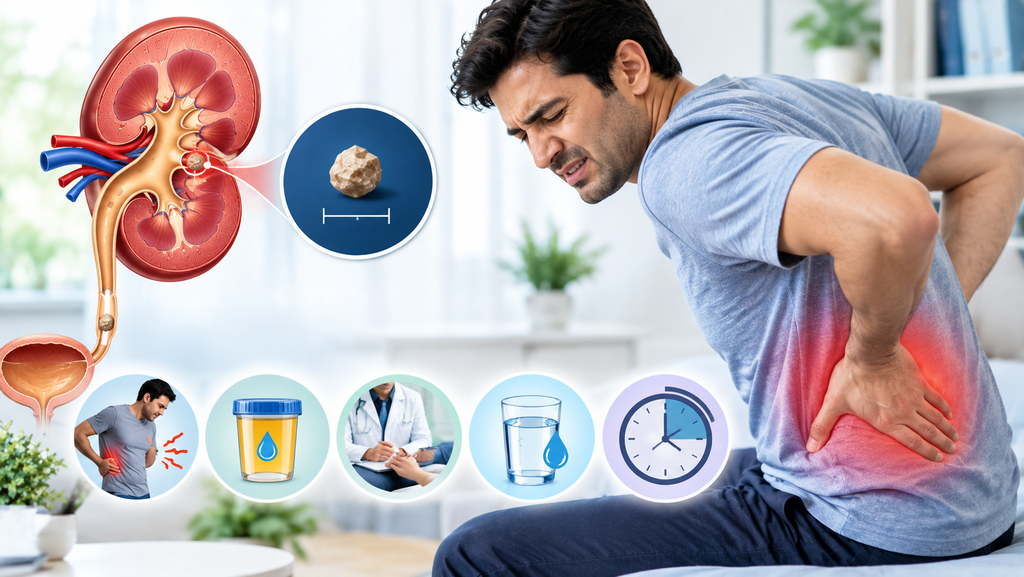
Yes. A 3 mm stone can cause severe pain, particularly when it moves through the ureter. The pain may start in the back or side and move toward the lower abdomen or groin. It can also come in waves as the ureter contracts around the stone.
So, how painful is a 3 mm kidney stone? Pain can range from mild to severe. Stone size alone does not determine how much pain you will experience.
Where Can a 3 mm Kidney Stone Be Located?
A 3 mm kidney stone can be located in different parts of the urinary tract.
In the Kidney
A stone that remains in the kidney may cause few or no symptoms.
In the Ureter
A 3 mm kidney stone in ureter may cause flank pain, blood in urine, nausea or changes in urine flow as it moves.
Near the Bladder
As the stone gets closer to the bladder, you may notice increased urinary frequency or urgency.
The stone’s location can influence its symptoms, movement and how easily it passes through the urinary tract.
How long does a 3 mm Kidney Stone take to Pass?
There is no exact timeline for everyone. Some stones pass naturally, while others may take longer or become stuck.
The stone’s location is especially important. A 3 mm kidney stone in ureter may cause pain as it moves toward the bladder. If urine flows normally and there are no complications, your doctor may recommend monitoring the stone.
Passage can depend on:
- Stone location
- Stone movement
- Urine flow
- Urinary tract anatomy
- Presence of blockage or infection
The time it takes for a 3 mm stone to pass can vary, so monitoring symptoms and following your doctor’s advice is important.
Can a 3 mm Kidney Stone pass naturally?
In many cases, a 3 mm kidney stone can pass naturally without the need for a procedure. However, how easily it passes depends on its location, movement and whether it is blocking urine flow.
Important Note: Your doctor may recommend monitoring the stone, managing pain and staying properly hydrated. Avoid drinking excessive amounts of water to force the stone out; follow your healthcare provider’s fluid recommendations.
Is a 3 mm Kidney Stone dangerous?
A 3 mm stone is generally small but its location can still cause problems. If it becomes stuck, it may interfere with urine flow and lead to urinary obstruction or infection.
Seek medical care if you develop:
- Severe or worsening pain
- Fever or chills
- Persistent vomiting
- Difficulty urinating
- Significant blood in the urine
- Signs of infection
The risk of 3 mm kidney stone complications depends mainly on its location and how it affects urine flow.
3 mm Kidney Stone Treatment
The appropriate 3 mm kidney stone treatment depends on your symptoms, the stone’s location and whether complications are present.
Monitoring
If the stone is small and there are no concerning symptoms, your healthcare provider may recommend monitoring while waiting for it to pass.
Pain Management
Your healthcare provider may recommend appropriate medication if the stone causes pain or discomfort.
Stone Removal
If the stone does not pass or causes complications, treatment may include lithotripsy or ureteroscopy.
A personalized treatment plan helps determine whether monitoring, medication or 3 mm kidney stone removal is the most appropriate option for your condition.
Does a 3 mm Kidney Stone require surgery?
Not usually. Many 3 mm stones can pass without a surgical procedure. An intervention may be considered when the stone remains stuck, causes ongoing symptoms or leads to complications. Your healthcare provider can recommend the appropriate option based on your symptoms and imaging results.
How Is a 3 mm Kidney Stone diagnosed?
A 3 mm kidney stone diagnosis may involve a physical examination, urine or blood tests and imaging.
Common tests include:
- Urine testing
- Blood tests
- CT imaging
- Ultrasound when appropriate
Imaging can confirm the 3 mm kidney stone size, location and whether it is affecting urine flow.
What happens If a 3 mm Kidney Stone does not pass?
If a 3 mm stone does not pass, your healthcare provider may recommend follow-up or repeat imaging. Further treatment may be needed if the stone remains stuck or causes ongoing problems such as pain, infection or impaired urine flow.
When should you see a Doctor for a 3 mm Kidney Stone?
Seek medical care if you have severe or worsening pain, fever or chills, persistent vomiting, difficulty urinating, significant blood in the urine or signs of infection.
Prompt evaluation is especially important when symptoms suggest a blockage or infection.
How to Prevent Future Kidney Stones
After passing a stone, kidney stone prevention can help reduce the risk of developing another one.
Helpful steps include:
- Drink fluids as advised by your doctor.
- Limit excessive sodium intake.
- Follow a balanced diet.
- Maintain a healthy weight.
- Follow recommendations based on your stone type.
If you develop kidney stones repeatedly, your healthcare provider may recommend additional testing to identify the possible cause.
About The Kidney MD
The Kidney MD provides specialized kidney care in El Paso, including evaluation and treatment for kidney stones. The team focuses on personalized care to help patients understand their condition, manage symptoms and support long-term kidney health.
Why Choose The Kidney MD for 3 mm Kidney Stone Care?
The Kidney MD provides specialized care for patients with kidney stones, focusing on accurate evaluation, appropriate treatment and ongoing support.
- Expert Kidney Care: Evaluation by an experienced kidney specialist.
- Accurate Diagnosis: Assessment of stone size, location and related symptoms.
- Personalized Treatment: Care based on your individual condition and stone characteristics.
- Passage & Treatment Guidance: Support for monitoring, natural stone passage or removal when needed.
- Ongoing Kidney Care: Guidance to help reduce the risk of future kidney stones.
With personalized care and evidence-based treatment, The Kidney MD helps patients manage 3 mm kidney stones with the right care at every stage.
Need Help With Kidney Stone?
If you’re experiencing 3 mm kidney stone symptoms, don’t ignore persistent pain or urinary changes. Contact The Kidney MD for evaluation, diagnosis and personalized treatment guidance.
Contact The Kidney MD for personalized kidney stone treatment in El Paso, TX.
Contact Information
The Kidney MD
Address: East Location, 11163 La Quinta Pl, Suite A200, El Paso, TX 79936
North East Location, 9101 Dyer St #102, El Paso, TX 79924
Call: 915-218-6055
Email: contactus@thekidneymd.com
Final Thoughts
A 3 mm kidney stone is generally small and many stones can pass naturally without a procedure. However, passage time can vary depending on the stone’s location, movement and effect on urine flow. Understanding your symptoms can help you recognize when medical evaluation may be needed.
If you develop severe pain, fever, persistent vomiting or difficulty urinating, seek prompt medical care. The Kidney MD can help evaluate your condition and determine the appropriate 3 mm kidney stone treatment based on your symptoms, stone location and overall kidney health.
“Small stone, informed care, healthier kidneys.”
FAQs – 3 mm Kidney Stone: Symptoms, Treatment & How Long It Takes to Pass
Q1. How long does a 3 mm kidney stone take to pass?
Ans. There is no fixed timeline. A 3 mm kidney stone may pass naturally but the time can vary based on its location, movement and whether it affects urine flow.
Q2. Can a 3 mm kidney stone pass naturally?
Ans. Yes, many small stones can pass on their own without a procedure. Your healthcare provider may recommend monitoring, symptom management and appropriate hydration.
Q3. Is a 3 mm stone dangerous?
Ans. A 3 mm stone is generally small but it can still cause problems if it becomes stuck. Seek medical care if you develop severe pain, fever, difficulty urinating or other concerning symptoms.
Q4. Can a 3 mm stone cause severe pain?
Ans. Yes. A 3 mm stone can cause significant pain, particularly when it moves through the ureter. Pain intensity does not always depend on the stone’s size.
Q5. When should I see a doctor for a 3 mm stone?
Ans. See a doctor if you have severe or worsening pain, fever or chills, persistent vomiting, difficulty urinating, significant blood in your urine or signs of infection or urinary obstruction.